 Oanarina Journal
What late afternoon light does to a room
Watch where the light lands before you choose the colour of a wall, the finish on a table, or the spot for a reading chair.
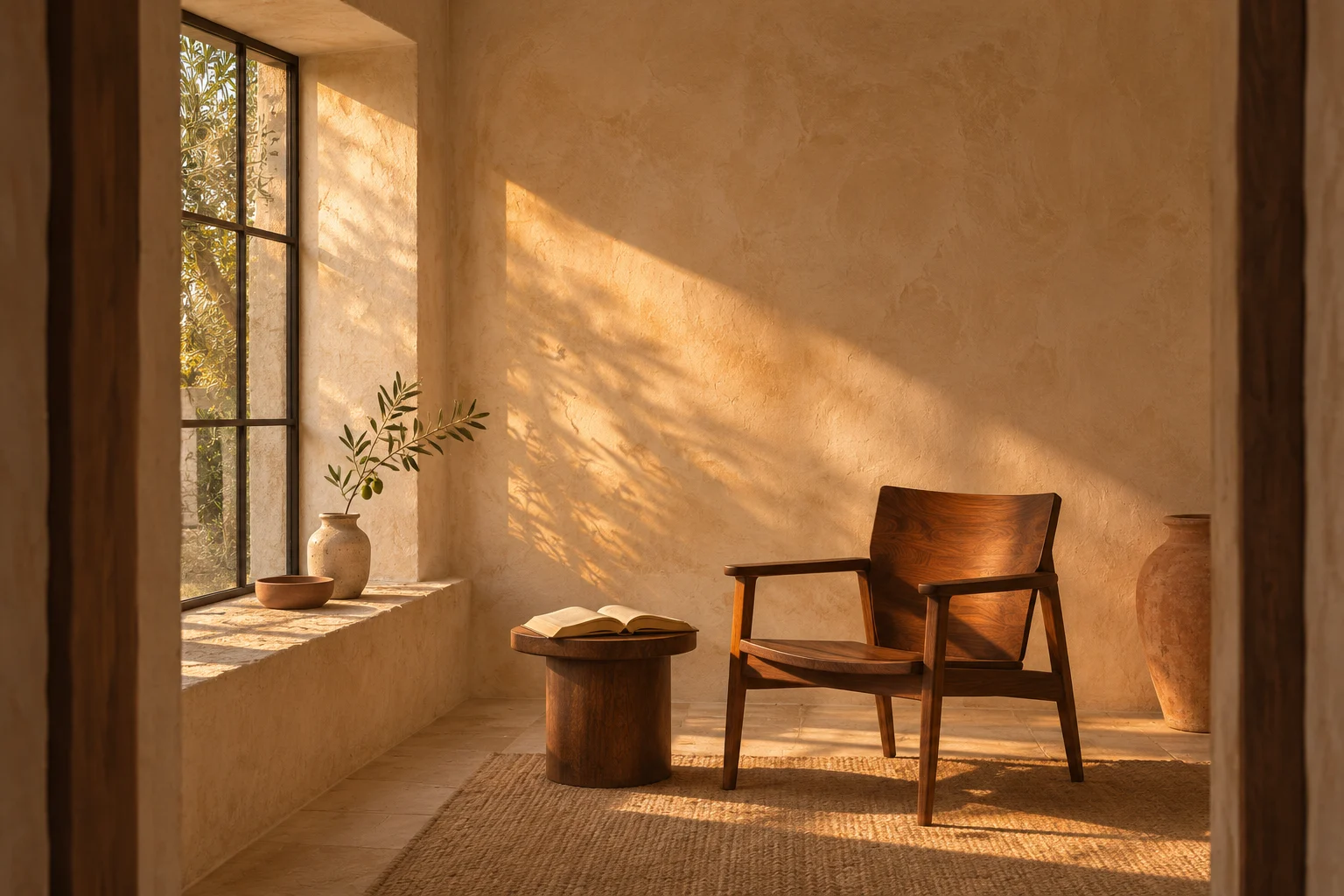
Follow the bright patch
A room you know well can look briefly unfamiliar late in the day. A window frames a bright patch on the floor, and the edge of a chair casts a long shadow. If the sun can reach the room at that angle, the light moves across surfaces that looked nearly uniform at midday. It is a good moment to see where you actually want to sit, and what you would rather leave in shadow.
Try the simplest version of a daylight study. On a clear day, photograph the same corner from the same spot in the morning, around midday, and again late in the afternoon. Keep the lamps off for the comparison. Notice when a table becomes difficult to read at, a passage gains depth, or a wall makes the room feel warmer. A nearby building or deep window reveal might block the direct sun altogether. That is an observation worth keeping, too.
Give your materials the same light
Hold two samples against the wall where they would actually go. A pale paint chip laid flat on a windowsill can tell a different story from the same chip held upright in a darker corner. Keep your samples on the same plane so you can compare them. Then move them together to the walls that catch more light and watch what changes.
Side light can bring out the ridges of rough plaster and the grain in a piece of wood. It can also reveal a bright reflection on a glossy tabletop right where your eyes fall. Look from the chair you plan to use. If that reflection is distracting, try turning the table, shifting the chair, or comparing a lower-sheen sample in the same place.
Change one thing at a time
Make two sketches of the corner before you move anything heavy. Try the chair facing the window in one and perpendicular to it in the other. Keep the materials and viewpoint the same. This makes it easier to notice what the change does to the view, where the light falls on a book, and how much room is left to walk past.
An image can help you decide which version to try first. The most revealing check is still to sit there for ten minutes while the light is doing the thing you noticed. You might keep the wall exactly as it is and move the chair half a metre.
Further reading
AI Architecture Render
If you want to compare two looks before moving furniture or buying finishes, start with a room photo or a sketch and use our app to explore materials and lighting in concept renders. Some generation features require paid credits or in-app purchases.